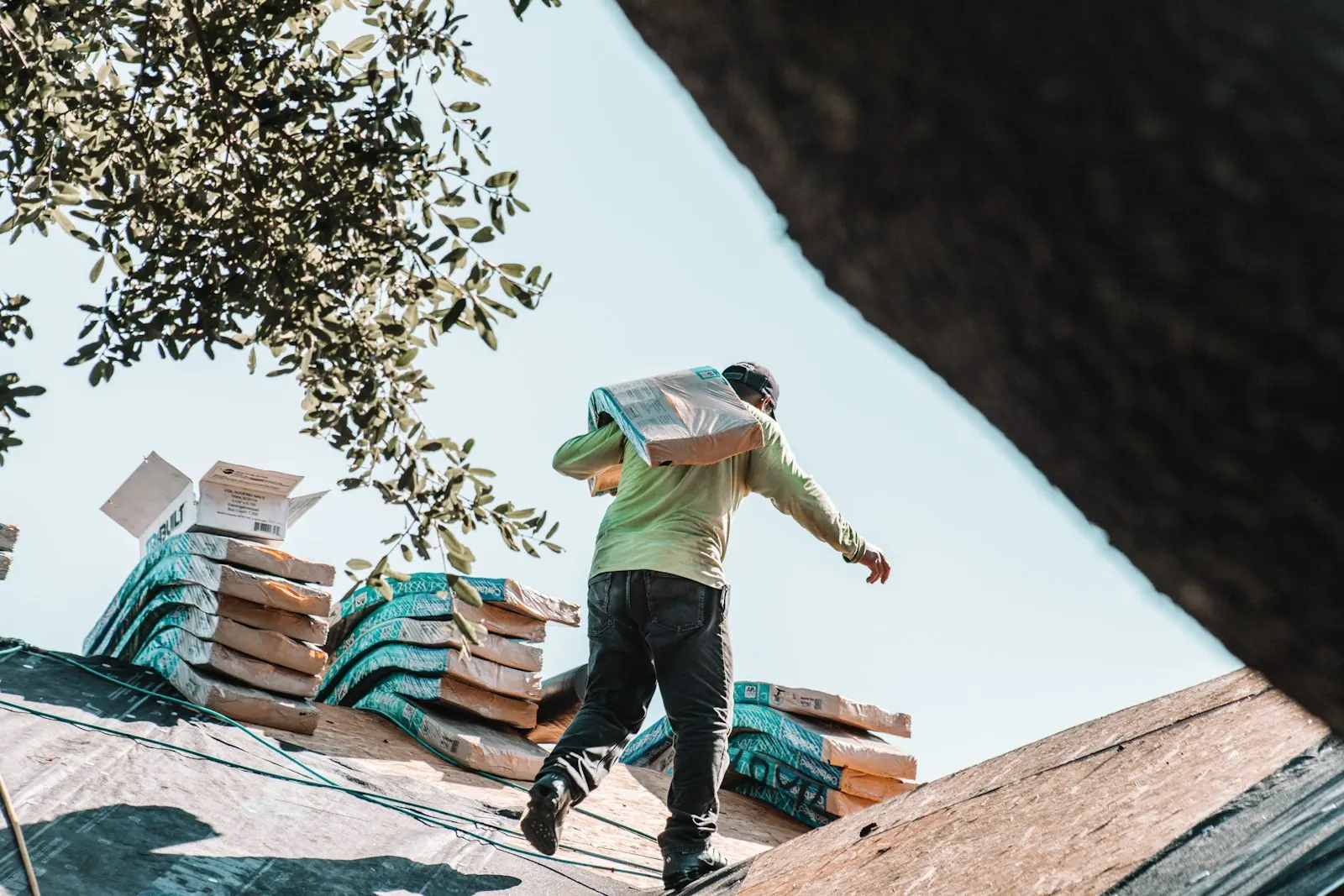
What it is
Storm damage roof is a broad term. It can mean missing or lifted shingles, cracked or dented materials, bent flashing, damaged gutters, punctured decking from a fallen limb, or water getting in around vents and chimneys. Some damage is obvious from the yard; some is subtle and only shows up later as a stain or drip.
Damage often looks different depending on the roof type, such as asphalt shingle, metal, tile or flat roofing, and on the kind of storm. Wind tends to lift or tear materials, hail can bruise or crack them, and debris can cause impact damage. Roofs with solar panels add another layer, since panels and their wiring can be affected too.
Not all damage is urgent, but water intrusion can spread quietly into insulation, ceilings and framing. That is why many homeowners choose to get a roof checked after a significant storm, even when things look fine from below.
Roof work is dangerous. Falls are a real risk, and a wet or damaged roof is even less forgiving.
How it’s traditionally been approached
Traditionally, homeowners start by looking from the ground, with binoculars if needed, and checking the attic and ceilings for leaks or daylight. Photos and notes with dates are commonly kept in case an insurance claim is filed. Everyday safety comes first, so people avoid climbing onto a storm-damaged roof.
The next step is usually a temporary measure, such as a tarp or other covering, to keep water out until a proper repair can happen. Many people hire a roofing contractor for this because working on a roof is hazardous and tarping done wrong can cause more problems.
From there, a roofer inspects the roof and writes up a repair or replacement estimate. Some homeowners get more than one written estimate and talk with their insurance company about coverage. Rules, deductibles and timelines vary by policy and location, so it pays to read your own paperwork.
How the right repair pro may help
The right roof repair pro may help by inspecting the roof safely, identifying visible and hidden damage, and explaining your options in plain language. A visit generally includes looking at the shingles or roofing surface, flashing, vents, gutters and sometimes the attic. They may take photos you can use for your records.
A pro may also help with temporary protection and with a written scope of work. If you have solar panels, a solar repair and service provider may be needed to check the system, and high-voltage solar work is not a DIY job.
Good questions to ask: Are you licensed and insured in my area? Will you provide a written estimate? Do permits apply? What is the warranty on labor and materials? How will you protect my property during the work? Confirm credentials yourself, since a directory listing alone is not a guarantee. For small, non-roof tasks like clearing a gutter from a ladder at ground-level reach or tidying yard debris, a handyman may be able to help.
The bigger picture
A damaged roof can be stressful. It touches your home, your budget and your sense of security, especially if there is a leak or a family to protect. Taking it one step at a time, such as safety, documentation, temporary cover and then a proper inspection, can make it feel more manageable.
Be cautious of pressure to sign quickly. Take time to compare written estimates and ask questions. If the financial side feels heavy, Providers.plus may be a helpful resource for broader support. Whatever approach you choose, a steady, informed decision usually serves you better than a rushed one.
Keep in mind
- Stay off a storm-damaged roof and keep clear of downed power lines; call the utility or 911 for emergencies.
- If you smell gas, leave the home and call the gas utility or 911.
- Roofing, electrical and solar work often require state or local licenses and permits, so confirm license and insurance before hiring.
- Costs vary widely, so get a written estimate and keep photos and records of the damage.
Not sure where to start? Answer a few gentle questions and choose who you’d like to hear from.
Frequently asked questions
What should I do first after a storm damages my roof?
Make sure everyone is safe and stay off the roof. If there is active danger like downed lines or a gas smell, leave and call the utility or 911. Then document damage with photos, protect belongings from leaks, and contact a licensed roofer.
How do I know if I have a storm damage roof?
Common signs include missing or curled shingles, granules in gutters, dents, bent flashing, debris on the roof, and ceiling stains or drips inside. Some damage is hidden, so a professional inspection is the most reliable way to know.
Can I repair a storm damage roof myself?
Roof work is dangerous and usually best left to a licensed pro, especially on wet, steep or damaged roofs. Simple ground-level tasks, like picking up debris, are lower risk. Always put safety first.
Should I tarp a storm damage roof?
A temporary covering can help keep water out until repairs are made, but installing one means working on the roof, which is risky. Many homeowners hire a roofing pro to do it so it is secured properly.
Does insurance cover a storm damage roof?
It depends on your policy, the cause of damage and your location. Read your policy and speak with your insurer directly. Photos, notes and written estimates are commonly helpful.
Who should I hire for a storm damage roof?
A licensed and insured roofing contractor is generally the right starting point. If you have solar panels, you may also need a solar repair and service provider. Confirm credentials yourself and get written estimates.
Educational resource. 2A Repair shares general information and connects people with independent repair pros. It is not professional advice. Talk with a qualified professional about your own situation.